Crete is located in the middle of the Eastern Mediterranean and constitutes one of the ten geographical regions of Greece. Crete lies in an east-west orientation and has a length of 260km, while the horizontal axis of the island fluctuates between 60 and 12km. Its total area is 8331km, making it the fifth largest island in the Mediterranean.
A number of small islands belong to Crete; principal among them is Gavdos, which is the southernmost point on the continent of Europe. The northern shores are washed by the Sea of Crete- a continuation of the Aegean – and the southern shores by the Libyan Sea.
Crete, with a population of more than 600 000 is divided into four Prefectures: Hania, Heraklion, Rethymnon and Lasithi.
With more than 1000km of coastline, a unique natural environment and a history going back 5000 years which has left its marks scattered across the landscape, Crete is a popular destination for thousands of visitors.
The island, which is crossed by the dense road network, is connected with Greece and the rest of the world via the harbours of its large cities, and also through the airports at Hania, Heraklion and Sitia. Crete will always be a draw to the sun worshippers. The mediteranean climate with its 300 days of sunshine a year, promotes an outdoor-orientated lifestyle. The city of Chania offers a high quality of life, highlighted by a rich natural beauty –both on land and in water – and an array of cultural entertainment during the summer month.
Blessed with a pleasant year-round oceanbreezes, beautiful beaches, Chania offers a delightful and sophisticated blend of old and new, formal and casual, variety of epicurean delights and superb shopping, premier opportunities for recreation, relaxation and enjoyment.
The city of Chania, the capital of the prefecture of Chania, the westernmost regional unit of Crete, is the most popular holiday destination in Crete and one of the most beautiful destinations in Greece.
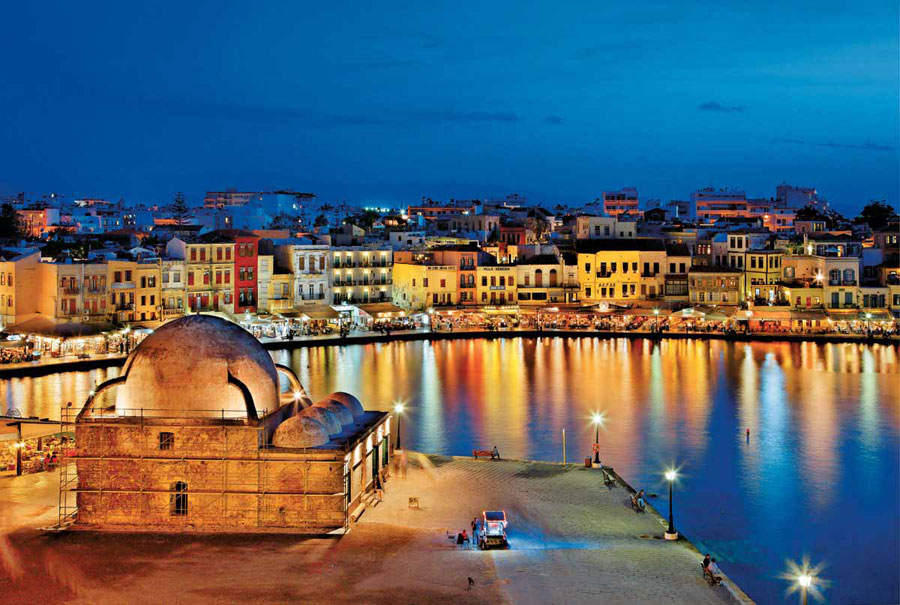
The old town of Chania is considered as one of the most beautiful spots on Crete, with its jewel - the charming old Venetian harbour of Chania, ideal place for a morning coffee, sightseeing, romantic walks in the evening, shopping and nightlife
Paleochora is a small town located 77 km south of Chania, at the southwest coastline of Crete and it’s built on a small peninsula of 400m width and 700m length. The town is set along 11 km of coastline bordering the Libyan Sea. Paleochora is built on the ruins of the ancient city of Kalamydi. It is the capital town of the municipality of Pelekanos and its population was 2213 in the 2001 census. Paleochora's economy is based on tourism and agriculture (mainly tomatoes cultivated in glass houses and also olive oil). It is a relaxing holiday destination since the early 1970s when it was popular with hippies. Paleochora is currently one of the fastest growing tourist towns on Crete.
The gorge of Samaria is situated in the National park of Samaria, in the White Mountains in West Crete. This majestuous gorge is considered one of the great attractions of Crete and many tourists want to visit it. But you must realise that it is a long (5 to 7 hours) walk on rough terrain so you will need to have a certain degree of fitness and walking experience in order to enjoy it.
Chora Sfakion is located on the southern coast of the prefecture of Chania, Crete, 75 km from Chania, and is the seat of the Municipality of Sfakia, a region in the southeastern part of the prefecture of Chania, known in a word as Sfakia.
This small village of Sfakia, as well as the whole area of Sfakia in general, is a place for anyone looking for contact with nature on their holidays, away from the mass tourism of the northern areas of the prefecture of Chania.
The Monastery of Agia Triada stands out for its façade with the Doric columns, as well as the elements of Renaissance architecture that remind us that the monastery was built by the Cretan monks Jeremiah and Lavrentios from the Venetian Orthodox Tzagarolos family.
The Tzagarolon Monastery is a Patriarchal - Stavropigyia Monastery, and today it is one of the most important monasteries of Crete, with a tremendous impact on the education of the island.
The exotic beach of Falassarna is located 59km west of Chania city and almost 17km west of Kissamos, at the western base of Cape Gramvousa. At the northern end of the beach there are the ruins of the ancient Grecoroman city of Falassarna.
Falassarna bay is one of the most famous beaches in Greece, which has been awarded as the best beach of Crete and voted as one of the 10 best beaches in Europe in the past. Falasarna spans a large area and consists actually of five consecutive beaches, with the two most central being the most favorite.
Elafonissi is a small island with white sand, which separates it from the mainland by a lagoon with a depth of 1 meter or more. What characterizes Elafonisi and makes it part exotic is the small islets with the very fine white sand that roses in several places, the lagoon formed and the turquoise shallow waters.
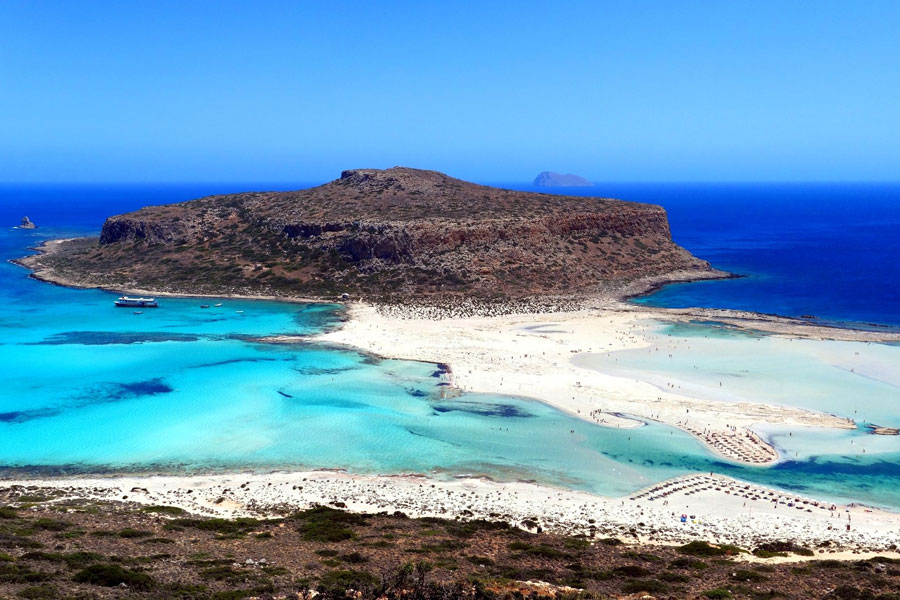
The famous lagoon of Balos is located approximately 56km northwest of Chania and 17km northwest of Kissamos, formed between the Cape Gramvousa and the small Cape Tigani and below the range of Platiskinos. Balos is surely the mostly photographed beach in Crete, a very favorite subject of all tourist guides for Greece. It is no coincidence that Prince Charles and Princess Diana visited Balos with their private yacht many years ago.
Sougia is a small village located 75km west of Chania city, at the exit of the beautiful Gorge of Agia Irini. A favorite destination for hippies in the 70s', today it is a perfect choice for peaceful holidays in a beautiful landscape with all the basic amenities provided. In Sougia you will find many restaurants, taverns, rooms, coffee shops, bars, mini market, etc. However, you will not find gas station, hospital, pharmacy or bank.